Skip to content




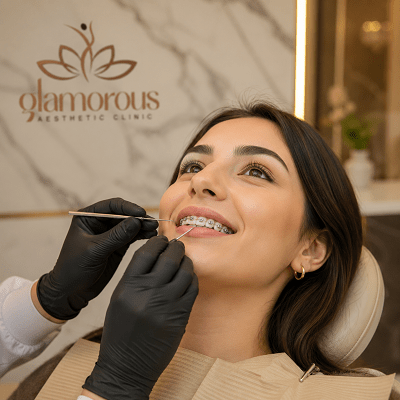
Dental braces are commonly used to correct uneven, crooked, crowded or misaligned teeth. They work by applying controlled pressure to gradually move teeth into better positions within the jaw. Depending on the individual’s dental condition, braces can also help close gaps, correct bite problems and improve the alignment of the upper and lower teeth. The treatment process varies according to the complexity of the alignment problem, the type of braces selected and individual response. At Glamorous Aesthetic Clinic, your teeth, bite and dental concerns are assessed before discussing How Can Dental Braces Correct Uneven Teeth and which orthodontic approach may be suitable for your needs.
Quick Facts:
- Cost: Rs 80,000 to Rs 400,000+ depending on individual treatment plan
- Treatment Type: Orthodontic teeth alignment treatment
- Main Purpose: To straighten uneven teeth and improve dental alignment
- Treatment Method: Controlled pressure gradually moves teeth into better positions
- Treatment Areas: Upper teeth, lower teeth or both dental arches
- Braces Types: Metal, ceramic, lingual braces and clear aligners, depending on suitability
- Main Goal: To improve crowding, spacing, crooked teeth and bite alignment
- Treatment Duration: Commonly 12 – 30 months, depending on complexity
- Anesthesia Type: Usually not required
- Adjustment Appointments: Scheduled throughout treatment according to the orthodontic plan
- Results: Gradual improvement in tooth position and alignment
- Longevity: Results can be maintained with appropriate retainer use
- Aftercare: Good oral hygiene, dietary precautions and regular dental appointments are important
- Possible Side Effects: Temporary soreness, pressure, irritation, gum inflammation or difficulty cleaning around braces
How Can Dental Braces Correct Uneven Teeth?
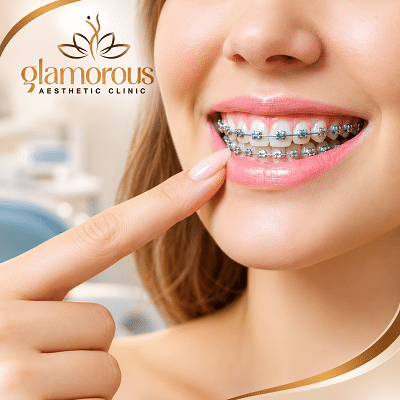
Dental braces correct uneven teeth by applying gentle, controlled pressure that gradually moves teeth through the surrounding supporting bone. Fixed braces generally consist of brackets attached to the teeth and connected by an orthodontic wire. The wire guides the teeth towards their planned positions over time. Clear aligners use a series of removable trays designed to apply pressure to selected teeth. Braces can address several alignment concerns, including crowded teeth, gaps, crooked teeth, protruding teeth and certain bite problems. Depending on the condition, orthodontic treatment may involve moving individual teeth, adjusting the relationship between the upper and lower dental arches or creating space for better alignment. The treatment plan depends on the individual’s dental structure, bite and overall oral health. At Glamorous Aesthetic Clinic, your teeth are assessed to help determine which orthodontic approach may be appropriate and what changes can realistically be expected.
Results OF How Can Dental Braces Correct Uneven Teeth?
Dental braces gradually move teeth into better positions, helping correct crooked teeth, reduce crowding, close gaps and improve certain bite problems. The extent of improvement depends on the initial alignment, jaw structure, treatment complexity and individual response. Some changes may become noticeable within the first few months, although complete treatment takes longer. After braces are removed, retainers help maintain the new tooth positions and prevent unwanted shifting. Regular orthodontic appointments, proper oral hygiene and consistent retainer use are important for maintaining the results.
Who Is A Good Candidate for Dental Braces?
- Adults and teenagers with crooked or uneven teeth
- Individuals experiencing crowded teeth or overlapping
- People with noticeable gaps between their teeth
- Individuals with certain overbite, underbite or crossbite concerns
- People whose teeth do not meet properly when biting
- Individuals experiencing difficulty cleaning between crowded teeth
- People seeking to improve their dental alignment and smile appearance
- Individuals with healthy teeth and gums or dental concerns that have been appropriately treated
- People willing to attend regular orthodontic appointments
- Individuals prepared to follow oral hygiene and retainer instructions
Not Suitable For:
- Individuals with untreated tooth decay or active gum disease
- People with significant oral infections requiring treatment first
- Individuals with poor oral hygiene who cannot maintain their teeth and braces
- People with certain complex jaw discrepancies that may require additional treatment
- Individuals with untreated dental conditions affecting tooth stability
- People unable to attend necessary adjustment and follow-up appointments
- Individuals unwilling to follow dietary and oral hygiene precautions
- People expecting immediate results from orthodontic treatment
- Individuals who have not received an appropriate dental and orthodontic assessment
Why Choose Glamorous Aesthetic Clinic for Dental Braces?
Correcting uneven teeth requires an understanding of tooth position, bite alignment and individual dental structure. At Glamorous Aesthetic Clinic, your dental concerns and treatment goals are considered before discussing an appropriate orthodontic approach. Your teeth, spacing, crowding and bite are assessed to understand the changes that may be possible. Your consultation also provides an opportunity to discuss different types of braces, expected treatment duration, adjustment appointments, possible side effects and retainer requirements. The focus is on individualized treatment planning and helping you understand what orthodontic treatment can achieve.
Your Personalized Consultation:
During your consultation, you can discuss which teeth appear uneven, whether you have gaps or crowding and whether you experience difficulty biting or chewing. Your dental professional will examine your teeth, gums and bite. Photographs, dental X-rays or digital scans may also be recommended to assess tooth positions and plan treatment. Your oral health, previous dental procedures and any existing dental concerns will be considered. Your specialist can then explain the available braces options, expected treatment duration, possible limitations and estimated cost according to your individual requirements.
Pre-Treatment Precautions:
- Have your teeth and gums examined before starting orthodontic treatment
- Treat existing cavities or gum problems before braces are fitted
- Inform your dental professional about your medical and dental history
- Mention any previous dental procedures or injuries
- Discuss existing crowns, fillings, missing teeth or dental implants
- Inform your specialist about any discomfort or jaw-related concerns
- Maintain good oral hygiene before treatment begins
- Ask whether dental X-rays, photographs or digital scans are required
- Discuss the different types of braces and their suitability
- Understand the expected treatment duration and adjustment schedule
- Ask about possible tooth extractions if additional space may be required
- Discuss retainer use and long-term maintenance before proceeding
Step-by-Step Procedure:
- Step 1: Comprehensive Consultation:
Your dental professional discusses your concerns, treatment goals, dental history and expectations about correcting uneven teeth.
- Step 2: Dental Examination:
Your teeth, gums, bite and jaw relationship are examined to identify crowding, spacing or alignment problems.
- Step 3: Dental Records and Assessment:
Photographs, X-rays or digital scans may be taken to understand tooth positions and support treatment planning.
- Step 4: Customized Treatment Planning:
Your specialist discusses the appropriate type of braces, expected tooth movements, treatment duration and whether any additional dental procedures may be required.
- Step 5: Teeth Preparation:
Your teeth are cleaned and prepared for the selected braces. Any necessary dental treatment should be addressed before fitting.
- Step 6: Braces Placement:
For fixed braces, brackets are attached to the teeth using dental adhesive, and an orthodontic wire is connected to guide tooth movement. Other orthodontic options are fitted according to their specific requirements.
- Step 7: Regular Adjustments:
You attend scheduled appointments so your specialist can assess progress and adjust the braces or provide the next aligner trays as required.
- Step 8: Braces Removal and Retainer Placement:
Once the planned tooth movements are complete, fixed braces are removed. Retainers are provided to help maintain the new tooth positions and reduce the risk of teeth shifting back.
Benefits:
- Helps straighten crooked and uneven teeth
- Can reduce dental crowding and overlapping
- Helps close selected gaps between teeth
- Can improve the alignment of upper and lower teeth
- May correct certain bite problems
- Can make teeth easier to clean when alignment improves
- May improve chewing function when bite problems are corrected
- Can reduce the risk of damage to some prominent teeth
- Offers different treatment options according to individual needs
- Can improve the appearance of the smile
- Provides gradual and planned tooth movement
- Can help maintain improved alignment when retainers are used as instructed
Aftercare:
- Brush your teeth carefully at least twice daily using fluoride toothpaste
- Clean around brackets and wires after meals
- Use an interdental brush or other cleaning aids recommended by your dental professional
- Avoid hard, sticky and chewy foods that may damage fixed braces
- Cut firm foods into smaller pieces when necessary
- Limit sugary foods and drinks to reduce the risk of tooth decay
- Attend all scheduled adjustment appointments
- Do not attempt to adjust or repair broken braces yourself
- Contact your dental professional if a bracket or wire becomes loose or damaged
- Follow instructions about managing temporary soreness
- Continue regular dental check-ups during orthodontic treatment
- Wear your retainer as instructed after braces are removed
- Keep removable retainers clean and store them safely when not in use
Cost of Dental Braces in Islamabad:
The Cost OF Dental Braces at Glamorous Aesthetic Clinic ranges from Rs 80,000 to Rs 400,000+, depending on the type of braces, dental alignment concerns and treatment duration. The final cost is determined by your individual orthodontic requirements and the treatment plan.
| Dental Braces Treatment | Average Cost (PKR) |
| Metal Braces | Rs 80,000 – Rs 200,000 |
| Ceramic Braces | Rs 120,000 – Rs 250,000 |
| Lingual Braces | Rs 160,000 – Rs 350,000 |
| Clear Aligners | Rs 150,000 – Rs 400,000+ |
| Orthodontic Consultation | Rs 2,000 – Rs 5,000 |
| Retainers | Rs 5,000 – Rs 20,000 |
| Complete Braces Treatment | Rs 80,000 – Rs 400,000+ |
Factors Affecting Cost:
- Type of braces selected
- Complexity of tooth alignment
- Degree of dental crowding or spacing
- Whether the upper teeth, lower teeth or both arches require treatment
- Presence of bite problems
- Expected treatment duration
- Number of adjustment appointments
- Whether additional dental procedures are required
- Need for dental X-rays, photographs or digital scans
- Type of retainers required after treatment
- Individual dental health and treatment requirements
- Follow-up and maintenance requirements
FAQ,S OF Dental Braces in Islamabad:
How Long Does It Take for Braces to Straighten Uneven Teeth?
Treatment commonly takes 12 to 30 months, although the duration depends on the complexity of the alignment problem.
Can Braces Fix Crooked Teeth?
Yes, braces can gradually move crooked teeth into better positions when orthodontic treatment is suitable.
Can Braces Correct Overlapping Teeth?
Yes, braces can help align overlapping teeth by creating space and guiding them into more appropriate positions.
Can Braces Close Gaps Between Teeth?
Yes, braces can gradually close suitable spaces between teeth as part of an individualized treatment plan.
Can Braces Correct Bite Problems?
Braces can correct certain bite problems, including selected overbites, underbites and crossbites.
Are Braces Suitable for Adults?
Yes, adults can receive orthodontic treatment if their teeth and gums are healthy enough and the treatment is appropriate.
Which Type of Braces Is Best for Uneven Teeth?
The suitable option depends on the alignment problem, treatment goals, dental condition and individual preferences.
Do Braces Hurt When They Are First Fitted?
Braces may cause temporary pressure, tenderness or soreness for a few days after fitting or adjustment.
Can Braces Change the Shape of Your Smile?
Braces can improve the alignment of teeth and may change the appearance of your smile, depending on the treatment plan.
Do I Need to Wear a Retainer After Braces?
Yes, retainers are generally recommended after orthodontic treatment to help prevent teeth from shifting.
Can Uneven Teeth Become Straight Without Braces?
Some mild alignment concerns may be treated with clear aligners or other suitable orthodontic options, but the appropriate approach depends on the individual case.
Are Dental Braces Permanent?
The tooth movements can be long-lasting, but teeth may shift over time, making retainer use important.
What Is the Cost of Dental Braces in Islamabad?
The cost depends on the type of braces, complexity of alignment, treatment duration and individual requirements at Glamorous Aesthetic Clinic.
Why Should I Choose Glamorous Aesthetic Clinic for Dental Braces in Islamabad?
Glamorous Aesthetic Clinic discusses dental alignment, suitable braces options, treatment duration, expected results and cost according to individual requirements.
Book Your Consultation Today!
If you are wondering, How Can Dental Braces Correct Uneven Teeth?a professional dental assessment can help you understand how orthodontic treatment may improve your tooth alignment and bite. At Glamorous Aesthetic Clinic, your dental condition, treatment goals and individual requirements are considered before discussing suitable braces options. Schedule a consultation to learn about the treatment process, expected duration, possible results and cost before making a decision.

Dr.Annas Sani

Introduction: Dr. Annas Sani is a highly motivated and compassionate physician with a strong background in internal medicine, general practice...
View Profile
Dr. Mehwish Asad
Introduction: Dr. Mehwish Asad is an Aesthetic and General Surgeon, a motivated and hardworking specialist, enthusiastic about medical services...
View Profile
Dr. Ahmed Ali
At our clinic we introduce you to our certified and professional Dr Nadia Tariq, a well known plastic and reconstructive surgeon and aesthetician...
View Profile
Dr. Nadia Tariq
At our clinic we introduce you to our certified and professional Dr Nadia Tariq, a well known plastic and reconstructive surgeon and aesthetician...
View Profile
Dr. Fabiha Abid
We proudly introduce you to our certified and highly skilled Dr. Fabiha Abid, a renowned physiotherapist and aesthetician providing...
View Profile
Dr. Sabeela Imran
Dental Surgeon (BDS) | PMDC Registered: Dr. Sabeela Imran is a patient-friendly dental surgeon who is passionate about...
View Profile
Dr. Samra Liaquat
At our Glamorous Clinic, we proudly announce our medical professional Dr. Samra Liaquat, an experienced dental surgeon and aesthetic...
View Profile
Dr. Zala Ejaz
Introducing Dr. Zala Ejaz – a highly skilled and trained Dermatologist and Aesthetic Physician with extensive clinical experience in diagnosing...
View Profile
Dr. Rabia Qazi
Aesthetic Doctor | GMC Registered | NHS Doctor Dr. Rabia Qazi is a highly qualified aesthetic physician dedicated to delivering...
View Profile
Dr. Abida Sardar
Meet Dr. Abida Sardar—the Consultant Dermatologist and Aesthetic Physician at Glamorous Aesthetic Clinic Islamabad. With more than 19 years of...
View Profile
Dr. Muqaddas Mahnoor
Doctor of Physical Therapy (DPT) | Cardiac Perfusion Technology Student | Science Educator Dr Muqaddas Mahnoor at Glamorous Aesthetic Clinic...
View Profile
Dr. Mahrukh Ali
Dentist | Aesthetic Physician. Dr. Mahrukh Ali is an expert dentist and aesthetician with experience in general dentistry and aesthetic treatments.
View Profile