Skip to content
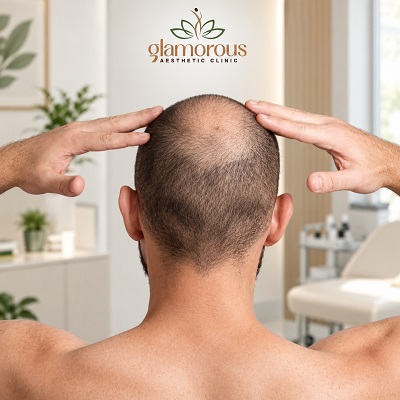


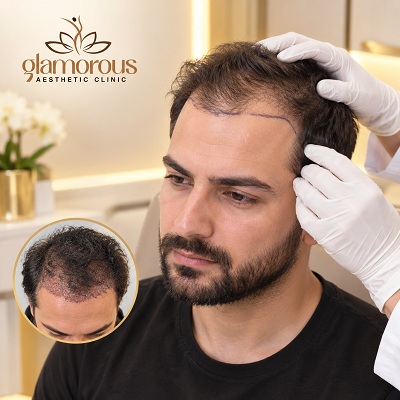
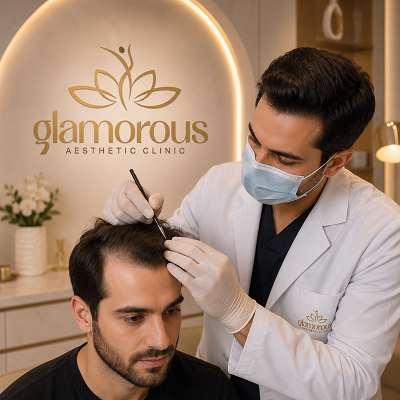
Many people considering hair restoration wonder,How Many Grafts Do I Need for A Hair Transplant? The answer depends on the extent of hair loss, the areas being treated, existing hair density, donor hair availability and the level of coverage you want to achieve. Someone with a receding hairline may need fewer grafts than someone with thinning across the front, middle and crown of the scalp. At Glamorous Aesthetic Clinic, your hair-loss pattern, donor area and individual goals are considered when discussing a suitable treatment plan. Understanding how grafts are estimated and what affects the final number can help you develop realistic expectations before a hair transplant.
Quick Facts:
- Graft Requirement: May range from around 500 to 4,000+ grafts, depending on hair loss and donor availability
- Treatment Type: Surgical hair restoration
- Personalization: Based on hair-loss pattern, scalp condition, donor density and individual goals
- Treatment Area: Hairline, temples, frontal scalp, mid-scalp and crown
- Main Goal: Restore hair coverage and improve the appearance of thinning or bald areas
- Treatment Method: Hair follicles are taken from a donor area and transplanted into selected areas of the scalp
- Treatment Duration: Usually several hours, depending on the number of grafts and surgical technique
- Anesthesia Type: Usually local anesthesia
- Side Effects: Swelling, redness, tenderness, temporary shedding or discomfort may occur
- Benefits: May improve hair coverage and create a fuller-looking appearance
- Longevity: Transplanted follicles can provide long-lasting growth, although existing non-transplanted hair may continue to thin
How Many Grafts Do I Need for a Hair Transplant?
The number of grafts needed for a hair transplant depends on how much hair you have lost and how much coverage is required. A person with a slightly receding hairline may need around 800 to 1,500 grafts, while someone with more extensive thinning across several scalp areas may require 2,500 to 4,000 or more. A graft is a small unit of tissue containing one or more hair follicles. It is not the same as an individual hair strand because one graft may contain multiple hairs. The number of grafts is estimated by assessing the treatment area, existing hair density, donor supply and desired coverage.
At Glamorous Aesthetic Clinic, the consultation focuses on understanding your hair-loss pattern and determining how many grafts may be suitable for your scalp. The aim is to plan coverage while preserving enough donor hair for future needs.
Results OF How Many Grafts Do I Need for a Hair Transplant:
Hair transplant results depend on the number of grafts transplanted, their placement, donor hair quality and individual healing response. The procedure may improve coverage in areas affected by thinning or Hair Loss. Newly transplanted hairs commonly shed during the early healing period before gradual regrowth begins. Visible growth develops over several months, while the final appearance may take around 12 months or longer to become established. The number of grafts alone does not guarantee a particular level of density, and realistic results depend on the available donor hair and treatment goals.
Who Is A Good Candidate for a Hair Transplant?
- Individuals with a receding hairline
- People experiencing male or female pattern hair loss
- Those with thinning across the frontal scalp
- Individuals with reduced hair density in the mid-scalp
- People with suitable donor hair at the back or sides of the scalp
- Adults with a relatively stable hair-loss pattern
- Individuals seeking improved coverage in selected areas
- People in suitable overall health for elective surgery
- Individuals with realistic expectations about hair density and results
Not Suitable For:
- Individuals without sufficient donor hair for the desired coverage
- People with active scalp infections or untreated scalp conditions
- Individuals with medical conditions that make elective surgery unsafe
- People with uncontrolled health conditions affecting healing
- Individuals expecting complete coverage regardless of donor availability
- People with unrealistic expectations about density or results
- Individuals experiencing unexplained or sudden hair loss that has not been assessed
- People unwilling to follow postoperative care instructions
Why Choose Glamorous Aesthetic Clinic for a Hair Transplant?
At Glamorous Aesthetic Clinic, hair transplant planning begins with evaluating your hair-loss pattern, existing scalp coverage and donor hair availability. Your specialist discusses the areas you would like to address and explains how graft requirements may differ according to your hair characteristics and desired results. The consultation also covers the recommended approach, expected coverage, recovery, possible complications and limitations of treatment. The focus is on individualized planning that aims to use available donor hair carefully while creating natural-looking coverage.
Your Personalized Consultation:
During your consultation, your specialist will ask about your hair-loss history, areas of concern and desired appearance. The scalp is examined to assess thinning, hair density, donor hair availability and the condition of the skin. Your medical history, current medicines, previous hair treatments and any relevant health conditions may also be reviewed. Your specialist will explain how graft requirements are estimated, which areas may be prioritized and what level of coverage may be realistic. You will also receive information about the procedure, possible risks, recovery instructions and whether any additional assessment is required before surgery.
Pre-Treatment Precautions:
- Share your complete medical history and previous hair treatments
- Inform your specialist about medicines, supplements and allergies
- Report any scalp infections, irritation or skin conditions
- Discuss any sudden or unexplained hair loss
- Complete recommended medical examinations before surgery
- Avoid smoking and nicotine according to your surgeon’s instructions
- Follow medical guidance about medicines that may increase bleeding
- Keep your scalp clean before the procedure as instructed
- Arrange transportation if sedation is planned
- Follow the clinic’s instructions about eating and drinking before surgery
Step-by-Step Procedure:
- Step 1: Comprehensive Consultation:
Your specialist discusses your hair-loss history, treatment goals, medical background and expectations for hair restoration.
- Step 2: Scalp and Donor Area Assessment:
The scalp is examined to evaluate the areas requiring coverage, existing hair density and available donor follicles.
- Step 3: Customized Graft Planning:
The estimated number of grafts and their distribution are planned according to your hair-loss pattern, donor supply and desired coverage.
- Step 4: Treatment Area Preparation:
The donor and recipient areas are prepared under appropriate sterile conditions. Hair trimming may be required depending on the selected technique.
- Step 5: Anesthesia Preparation:
Local anesthesia is administered to reduce discomfort during the donor and recipient stages of the procedure.
- Step 6: Graft Extraction:
Hair follicles are collected from the donor area using the selected hair transplant technique.
- Step 7: Graft Placement:
The prepared grafts are placed into the recipient areas according to the planned direction, angle and distribution.
- Step 8: Recovery and Follow-Up Care:
You receive personalized aftercare instructions, and follow-up appointments are arranged to monitor healing and hair growth.
Benefits:
- May improve coverage in areas affected by hair loss
- Can restore a receding hairline
- May increase the appearance of hair density
- Can address selected areas of scalp thinning
- Allows graft distribution according to individual needs
- Uses the individual’s own donor hair
- Can create natural-looking hair growth when carefully planned
- May improve the appearance of the frontal scalp
- Can provide long-lasting growth from successfully transplanted follicles
- Allows treatment planning according to donor availability and hair-loss pattern
Aftercare
- Follow your surgeon’s postoperative instructions carefully
- Keep the scalp clean as directed
- Avoid touching, scratching or rubbing the transplanted area
- Do not wash your hair until your surgeon advises you to do so
- Sleep with your head elevated if recommended
- Avoid strenuous activities during the initial recovery period
- Avoid direct pressure on the transplanted area
- Take prescribed medicines according to instructions
- Avoid smoking and nicotine during healing
- Protect your scalp from direct sunlight as advised
- Attend scheduled follow-up appointments
- Seek medical attention for fever, increasing redness, severe pain or unusual discharge
Cost of Hair Transplant in Islamabad:
The cost of a Hair Transplant at Glamorous Aesthetic Clinic ranges from Rs 85,000 to Rs 220,000+, depending on the number of grafts required, donor hair availability, treatment area and individual surgical needs.
| Hair Transplant Type | Average Cost (PKR) |
| 1,500 Grafts | Rs 85,000 – Rs 120,000 |
| 2,000 Grafts | Rs 110,000 – Rs 150,000 |
| 3,000 Grafts | Rs 140,000 – Rs 190,000 |
| 4,000 Grafts | Rs 170,000 – Rs 220,000 |
| Customized Hair Transplant | Depends on individual requirements |
Factors Affecting Cost:
- Number of grafts required
- Size of the treatment area
- Extent and pattern of hair loss
- Donor hair density and availability
- Existing scalp condition
- Hair transplant technique selected
- Complexity of the procedure
- Previous hair transplant procedures
- Individual hair characteristics
- Surgical and facility requirements
- Postoperative care and follow-up
- Individual treatment goals
FAQ,S OF How Many Grafts Do I Need for a Hair Transplant:
How Many Grafts Are Needed for a Receding Hairline?
A receding hairline may require around 800 to 1,500 grafts, depending on its shape, the degree of recession and the desired coverage.
How Many Grafts Are Needed for the Crown?
Crown restoration may require around 1,000 to 2,000 or more grafts, depending on the size of the thinning area and available donor hair.
How Many Hairs Are in One Graft?
One graft usually contains one to four hair follicles, although the number varies. This means the total number of hairs transplanted is generally higher than the graft count.
Is 2,000 Grafts Enough for a Hair Transplant?
It may be enough for a smaller treatment area or moderate hairline restoration, but more extensive hair loss may require additional grafts.
Can 4,000 Grafts Cover Extensive Hair Loss?
Around 4,000 grafts may provide coverage across larger areas in suitable candidates, but the final result depends on donor availability, scalp characteristics and treatment priorities.
Does Everyone Need the Same Number of Grafts?
No, graft requirements differ according to hair-loss pattern, scalp area, existing density, donor hair supply and individual goals.
How Is the Number of Hair Transplant Grafts Calculated?
The estimate is based on the size of the recipient area, existing hair density, desired coverage and the number of usable grafts available from the donor area.
Do More Grafts Guarantee Better Hair Transplant Results?
No, a higher graft count does not automatically produce better results. Appropriate placement, donor hair quality, graft survival and realistic treatment planning are also important.
Why Choose Glamorous Aesthetic Clinic for a Hair Transplant in Islamabad?
Glamorous Aesthetic Clinic emphasizes individualized scalp assessment, donor area evaluation and graft planning to help determine suitable hair restoration options and realistic coverage goals.
Book Your Consultation Today!
If you are wondering, How Many Grafts Do I Need for A Hair Transplant? a professional consultation can help you understand the coverage that may be possible with your available donor hair. At Glamorous Aesthetic Clinic, your specialist evaluates your hair-loss pattern, scalp condition and donor area before discussing suitable hair restoration options. Book your consultation today to explore your graft requirements and understand how an individualized treatment plan may improve hair coverage while preserving a natural-looking appearance.

Dr.Annas Sani

Introduction: Dr. Annas Sani is a highly motivated and compassionate physician with a strong background in internal medicine, general practice...
View Profile
Dr. Mehwish Asad
Introduction: Dr. Mehwish Asad is an Aesthetic and General Surgeon, a motivated and hardworking specialist, enthusiastic about medical services...
View Profile
Dr. Ahmed Ali
At our clinic we introduce you to our certified and professional Dr Nadia Tariq, a well known plastic and reconstructive surgeon and aesthetician...
View Profile
Dr. Nadia Tariq
At our clinic we introduce you to our certified and professional Dr Nadia Tariq, a well known plastic and reconstructive surgeon and aesthetician...
View Profile
Dr. Fabiha Abid
We proudly introduce you to our certified and highly skilled Dr. Fabiha Abid, a renowned physiotherapist and aesthetician providing...
View Profile
Dr. Sabeela Imran
Dental Surgeon (BDS) | PMDC Registered: Dr. Sabeela Imran is a patient-friendly dental surgeon who is passionate about...
View Profile
Dr. Samra Liaquat
At our Glamorous Clinic, we proudly announce our medical professional Dr. Samra Liaquat, an experienced dental surgeon and aesthetic...
View Profile
Dr. Zala Ejaz
Introducing Dr. Zala Ejaz – a highly skilled and trained Dermatologist and Aesthetic Physician with extensive clinical experience in diagnosing...
View Profile
Dr. Rabia Qazi
Aesthetic Doctor | GMC Registered | NHS Doctor Dr. Rabia Qazi is a highly qualified aesthetic physician dedicated to delivering...
View Profile
Dr. Abida Sardar
Meet Dr. Abida Sardar—the Consultant Dermatologist and Aesthetic Physician at Glamorous Aesthetic Clinic Islamabad. With more than 19 years of...
View Profile
Dr. Muqaddas Mahnoor
Doctor of Physical Therapy (DPT) | Cardiac Perfusion Technology Student | Science Educator Dr Muqaddas Mahnoor at Glamorous Aesthetic Clinic...
View Profile
Dr. Mahrukh Ali
Dentist | Aesthetic Physician. Dr. Mahrukh Ali is an expert dentist and aesthetician with experience in general dentistry and aesthetic treatments.
View Profile